

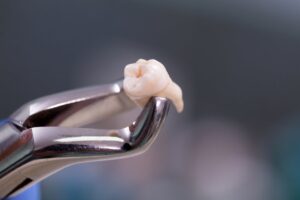
It can be confusing to hear your dentist recommend removing a tooth that isn’t causing any pain. After all, if it doesn’t hurt, why not just leave it alone? The truth is that pain isn’t always a reliable indicator of oral health. Many serious dental problems develop silently, causing little or no discomfort until they become much more advanced.
Here are some of the reasons your dentist may recommend extracting a tooth, even if it feels perfectly fine.
Severe Decay or Damage
A tooth doesn’t have to be painful to be beyond repair. In some cases, extensive decay or a large fracture may leave too little healthy tooth structure to support a filling or dental crown.
Even if the nerve inside the tooth has already died and is no longer sending pain signals, the tooth may still be at risk of infection or further breakdown. Removing it may be the best way to protect your surrounding teeth and oral health.
Advanced Gum Disease
Gum disease can gradually damage the bone and tissues that support your teeth. As the condition progresses, a tooth may become loose even if it doesn’t hurt.
If there isn’t enough healthy bone left to support the tooth, extraction may be the most appropriate treatment. Removing the affected tooth can also help manage the infection and prevent additional damage to neighboring teeth.
Impacted or Problematic Wisdom Teeth
Wisdom teeth don’t always cause pain, but that doesn’t necessarily mean they’re healthy. An impacted wisdom tooth may be trapped beneath the gums or growing at an angle that places pressure on neighboring teeth.
Your dentist may recommend removing a wisdom tooth before it causes pain, infection, cysts, or damage to adjacent teeth. Treating the problem early is often simpler than waiting for complications to develop.
Preparing for Other Dental Treatment
Sometimes a tooth needs to be extracted as part of a larger treatment plan. For example, your dentist or orthodontist may recommend removing certain teeth to create space before braces or clear aligner treatment.
In other cases, a severely damaged tooth may need to be removed before replacing it with a dental implant, bridge, or partial denture. These decisions are made to improve your long-term oral health and the success of future treatment.
Your dentist considers much more than whether a tooth hurts. X-rays, clinical examinations, and your overall oral health provide valuable information that can’t always be seen or felt. If an extraction is recommended, don’t hesitate to ask questions. Your dentist will explain why the tooth can’t be saved, discuss your treatment options, and recommend the best way to restore your smile if replacement is needed.
About the Practice
Is it time for your wisdom teeth to go? Our talented dentists at Fort Dental in Fort Worth can extract them with minimal discomfort to you. It’s common to be anxious about this procedure; that’s why our team is happy to provide oral sedation combined with a local anesthetic to remove one or more teeth while you are relaxed and comfortable. Come see what makes us a special practice! Schedule your appointment online or call (817) 292-5957.